
Learn, Share, Grow - Compassionate Leadership
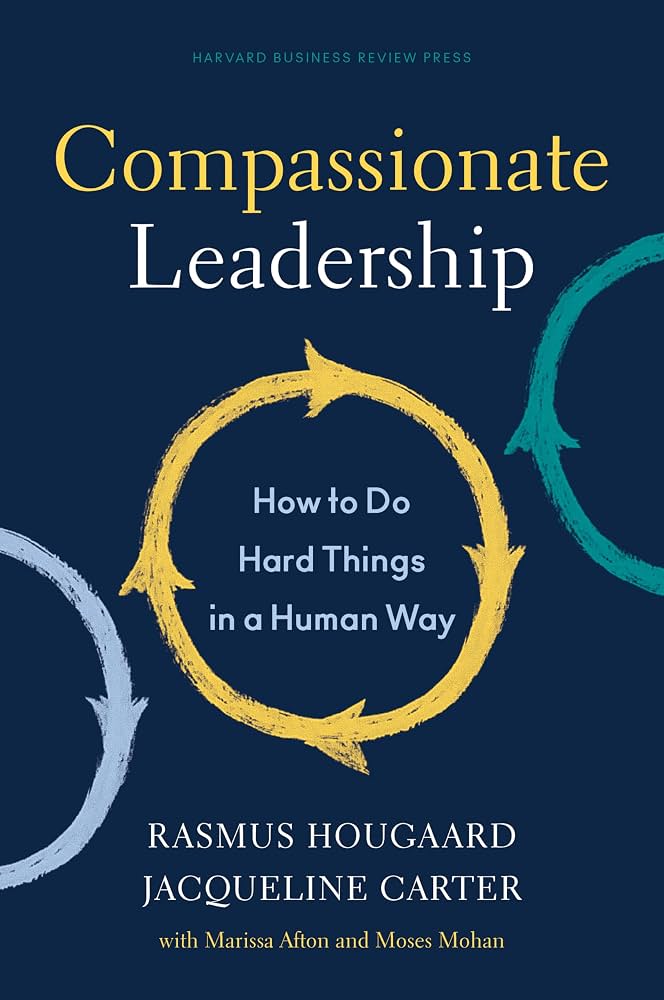
Below is a lesson from Compassionate Leadership by Rasmus Hougaard and Jacqueline Carter, as well as our key learnings.
The Blue Courage team is dedicated to continual learning and growth. We have adopted a concept from Simon Sinek’s Start With Why team called “Learn, Share, Grow”. We are constantly finding great articles, videos, and readings that have so much learning. As we learn new and great things, this new knowledge should be shared for everyone to then grow from.
INTRODUCTION
How to Do Hard Things in a Human Way
The greatest challenge for most leaders is doing hard things in a human way.
Leaders need to make decisions that impact people’s lives. They need to tell someone they did not get the promotion. They need to close an office, cancel a project, or manage an unpopular change. They need to give people tough feedback or let someone know they no longer have a job.
All leaders have to do these things that negatively impact other people. And that is hard. It is hard because we as humans are good. By nature, we want to do good, and we don’t like to hurt others.
The need for doing hard things in a human way is not new. But the need for it has recently increased. Today, people in companies expect a great work experience. They expect to feel connected, to feel valued, to feel cared for and cared about. This requires leaders who are able to create a more human world of work. When leaders manage to create this experience, people thrive and perform better.
This raises an important question: As a leader, how do you do the hard things that come with taking on the responsibility of leadership while remaining a good human being and bringing out the best in other humans? In other words, how do you do hard things in a human way?
This is an eternal conundrum for all leaders. And most think they have to make the difficult, binary choice between being a good person or being a hard leader. But this is a false dichotomy. It is a terrible choice that no leader ever needs to make. Being hard and being human are not mutually exclusive. In truth, they are aligned: doing hard things is often the most human thing to do. The ability to combine these two seeming opposites comes down to one thing: wise compassion.
Wisdom is to see reality clearly and act appropriately. It is the foresightedness that comes with experience, and it helps us to deal with hard things upfront rather than beating around the bush. To have wisdom means to have good judgment in how to lead others and how to run a business in a purposeful and sustainable way. As part of our research for this book, we looked at how leaders struggle most in this regard. The answer was clear: the hardest thing for most leaders is to find the courage to enter into difficult situations with other people. Most leaders find it harder to make a decision that impacts people than to make large, strategic, and potentially risky decisions. In this regard, wisdom in leadership is about having the courage to be candid and transparent with other people and do the things that need to be done—even when it is uncomfortable. Wisdom is to see clearly that if you don't do the hard things today, they will become even harder tomorrow.
Purchase the book here to continue reading.
Key Learnings:
Compassionate Leadership – Learning Review
One of the central ideas in Compassionate Leadership is that leadership begins with how we see people. Every interaction is an opportunity to either build trust or diminish it. Compassion is not lowering standards or avoiding difficult conversations—it is the discipline of recognizing the humanity in others while courageously pursuing excellence.
This message aligns deeply with the Blue Courage philosophy. We know that people do not simply remember what leaders say; they remember how leaders made them feel. The quality of our leadership is measured not only by outcomes, but by the culture we create every day. Compassion creates psychological safety, strengthens relationships, and allows people to perform at their best, especially under pressure.
The book challenges the traditional belief that authority alone inspires performance. Instead, it argues that the most effective leaders cultivate four essential habits:
-
They pay attention to people before they focus on problems.
-
They listen with curiosity rather than judgment.
-
They respond with empathy while maintaining accountability.
-
They create environments where people can learn, contribute, and grow.
For those of us in law enforcement, this is particularly relevant. We ask officers to make difficult decisions under extraordinary circumstances. The quality of those decisions is influenced by the quality of the environment in which they work. Leaders who create trust, connection, and belonging build teams that are more resilient, more adaptive, and more capable of serving their communities with professionalism and wisdom.
This also connects to what Blue Courage teaches about human flourishing. Courage and compassion are not competing virtues—they strengthen one another. Practical wisdom requires knowing not only what the policy allows, but what the moment requires. Compassion helps us recognize the person behind the behavior while courage helps us do what is right, even when it is difficult.
Takeaways
-
Compassion is a leadership strength, not a leadership weakness.
-
Accountability and empathy are partners, not opposites.
-
Trust grows when people feel seen, heard, and valued.
-
The culture leaders create becomes the culture officers deliver to the community.
-
Every conversation is an opportunity to strengthen someone's confidence, dignity, and commitment.
Questions for Reflection
-
How do I help people feel valued while still holding high expectations?
-
Do people leave interactions with me feeling stronger or smaller?
-
What habits can I develop to become more intentionally compassionate?
-
How does my leadership influence the culture others experience every day?
Grow Forward
This week, intentionally practice one act of compassionate leadership. Slow down enough to truly listen, seek to understand before being understood, and have one conversation that combines both accountability and care. Leadership is not only about achieving results—it is about developing people. When leaders grow in compassion, teams grow in trust, organizations grow in health, and communities grow in confidence.
Stay connected with news and updates!
Join our mailing list to receive the latest news and updates from our team.
Don't worry, your information will not be shared.
We hate SPAM. We will never sell your information, for any reason.
